
About this project
Abstract
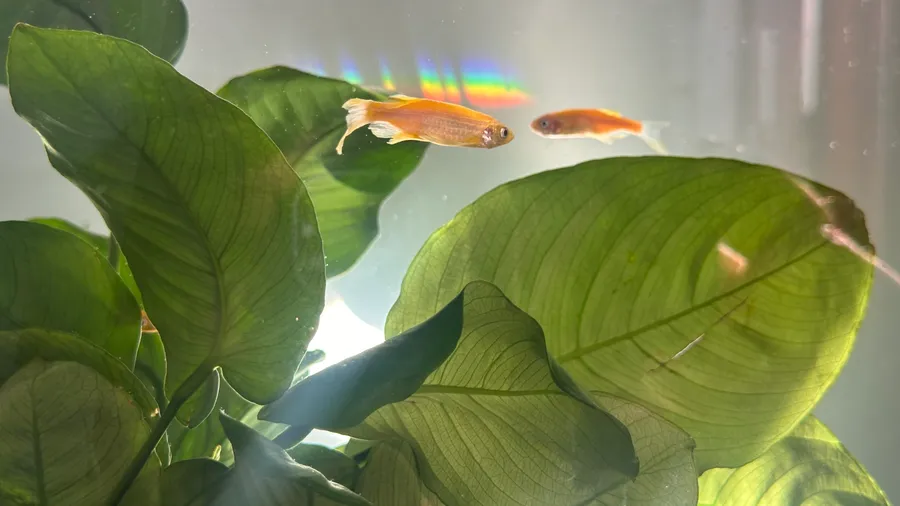
AquaMind is an open-source computer-vision tool that automatically tracks and analyses the behaviour of zebrafish (Danio rerio) in an observation tank. It replaces the manual behavioural scoring done by hand during a behavioural-ecology PhD with an automated PyTorch and OpenCV pipeline. The system detects and tracks individual fish across video frames, holds identity through occlusion behind plants and pipes, and uses that tracking to measure activity, bottom-dwelling, chasing and feeding strikes for a chemical-alarm-cue antipredator assay.
The problem
Section titled “The problem”During a behavioural-ecology PhD I scored fish behaviour by hand, frame by frame, for years: line crossings, feeding strikes, chases. It is slow, it does not scale, and it is hard to keep consistent between observers. AquaMind automates that scoring with a computer-vision pipeline.
What it does
Section titled “What it does”The pipeline detects and tracks individual fish across video frames, holding identity even when a fish is partly hidden behind the plant or a pipe, and then uses that tracking to measure real behaviour: activity, bottom-dwelling, chasing and feeding strikes, for a chemical-alarm-cue antipredator assay, a standard paradigm in the field.
How it is built
Section titled “How it is built”| Layer | Tools |
|---|---|
| Detection | YOLOv8, fine-tuned on hand-labelled frames |
| Tracking | a custom SORT-style tracker: constant-velocity motion model, OC-SORT direction consistency, merge-aware geometry, optional learned appearance embedding |
| Behaviour | kinematic features and CNN + LSTM classifiers, per behaviour |
| Data | MySQL for frames, annotations and tracks |
| ML operations | MLflow for experiment tracking and a model registry, DVC for dataset versioning |
Why this combination
Section titled “Why this combination”The point of the project is the behavioural-ecologist × ML-engineer overlap. I know what the behaviours mean and how they are measured in the field, not just how to detect a moving blob. AquaMind is built end to end: data pipeline, detector, tracker, re-identification and behaviour classifiers, with the experiment tracking and dataset versioning a real project needs.
Architecture overview
Section titled “Architecture overview”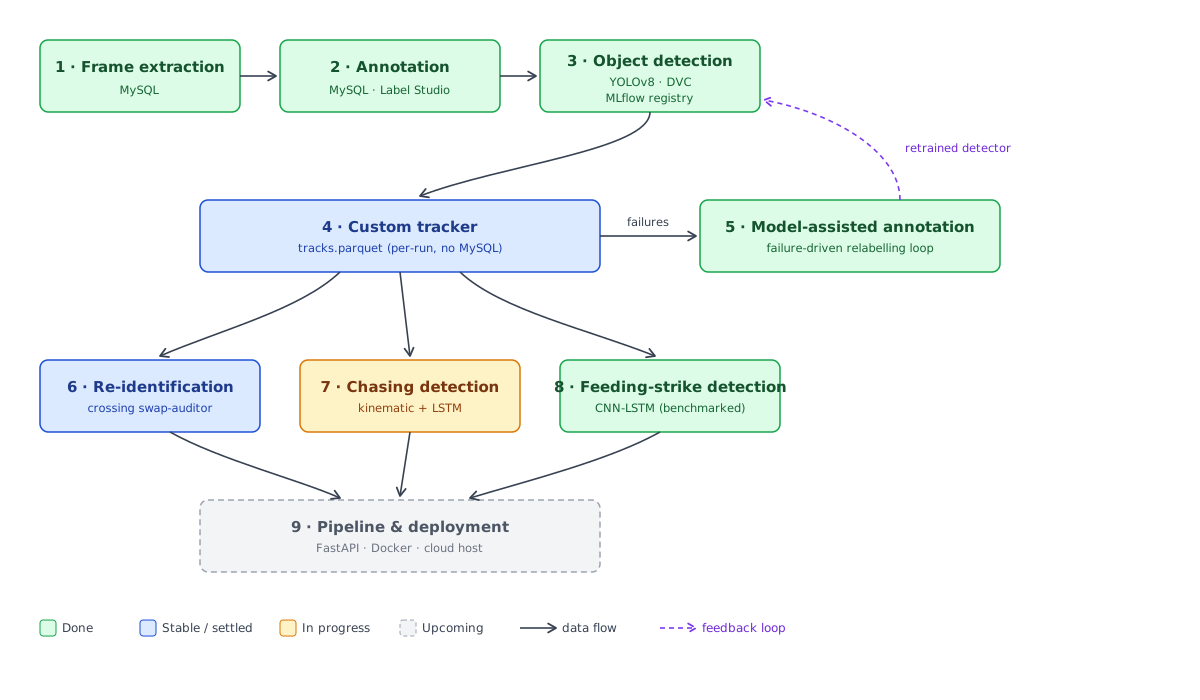
AquaMind today is a developer pipeline: scripts, a local MySQL database, MLflow and
DVC, no GUI. idtracker.ai already serves non-coding biologists; AquaMind’s value
here is the ML engineering and data architecture. A thin Streamlit/Gradio front
end and a Docker Compose bundle are a possible later step, not a requirement.
Background
Section titled “Background”Govinda Lienart, behavioural ecologist (PhD, James Cook University; published in Animal Behaviour) moving into machine-learning engineering.
- PhD in behavioural ecology, James Cook University
- Postgraduate AI, Erasmus Hogeschool Brussels
- PCAP-certified Python programmer
Contact
Section titled “Contact”- GitHub: github.com/govinda-lienart/AquaMind
- Email: gdh.lienart@gmail.com
- Looking for: Junior ML Engineer roles, Belgium, from September 2026
Where to start
Section titled “Where to start”- Architecture: the script-level, engineering-handoff diagram
- Stage 1 · Frame extraction: the build, stage by stage